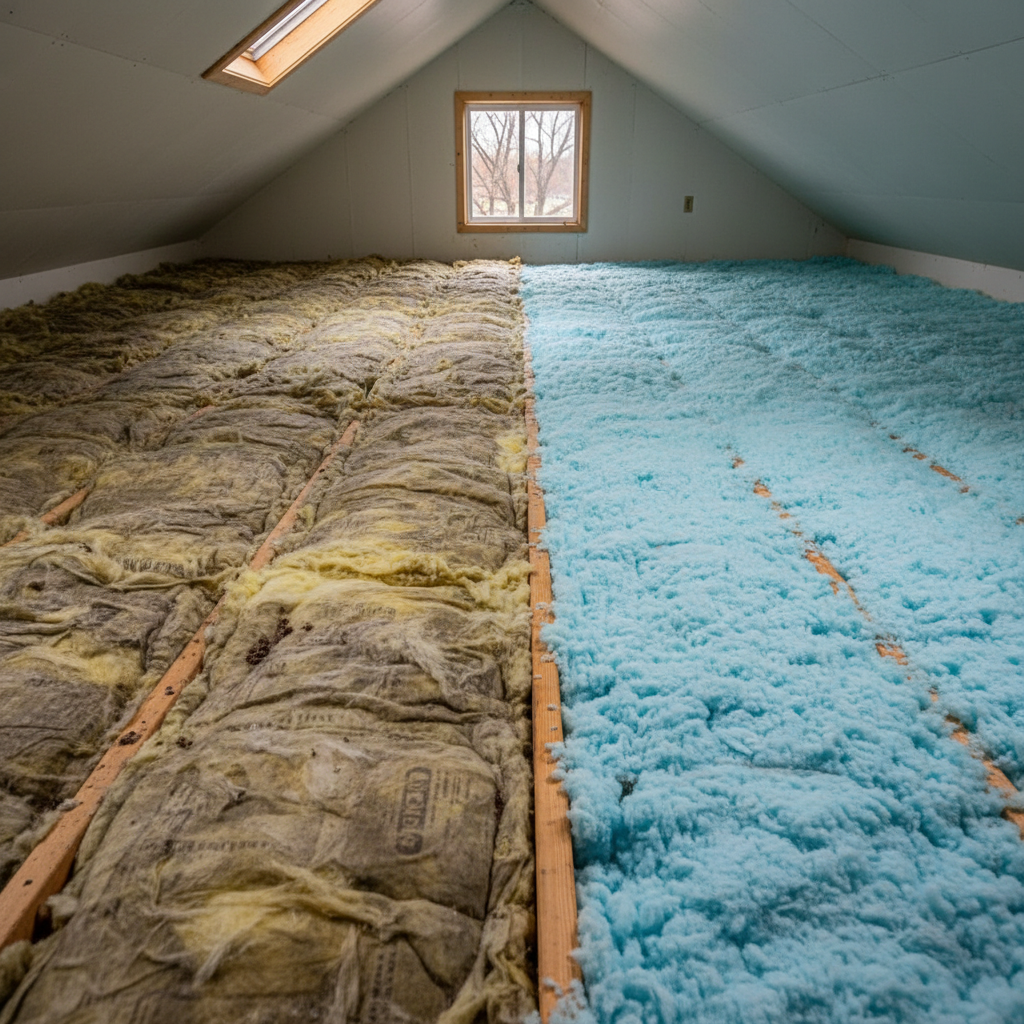
Alright, let's talk attic insulation. Maybe your house feels drafty, or those energy bills are just too high. Perhaps you're simply upgrading things. You've probably heard about a few options, right? Two of the most common for attics are blown-in cellulose and fiberglass batts. As someone who's been crawling around Evanston attics for years, I can tell you there's a real difference in how these perform, especially with our wild Illinois weather.
What's the Deal with Fiberglass Batts?
Fiberglass batts are probably what most people picture when they think of insulation. They come in those big rolls or pre-cut pieces, usually pink or yellow. They're made from fine glass fibers, and they work by trapping air within those fibers, which slows down heat transfer. You can find them in different R-values (that's how much they resist heat flow) and thicknesses.
Cost: Generally, fiberglass batts are the cheapest option upfront. You could even DIY them if you're comfortable getting up there and cutting them to fit. But be warned, it's itchy work, and you really need good protective gear.
Installation: Pretty straightforward for open, easy-to-access attics. You just lay them down between the joists. The trick, though, is making sure there are no gaps, no compressions, and that you're not blocking any soffit vents. That's where a lot of DIY jobs go wrong – those little gaps add up to big heat loss, believe me.
Durability & Maintenance: Fiberglass is pretty stable. It doesn't settle much over time, so its R-value stays consistent. It's also not a food source for pests, which is a plus. The main issue is if it gets wet; it loses its insulating properties and can take a long time to dry out, sometimes leading to mold if not addressed quickly. Oh, and it's easy to compress if someone walks on it, and compression kills R-value.
Appearance: Well, it's insulation. It looks like fiberglass batts. Not really something you're looking at for aesthetics, right?
Blown-In Cellulose: The Eco-Friendly Option?
Blown-in cellulose is a different beast entirely. It's made from recycled paper products, mostly old newspaper, treated with fire retardants and sometimes pest deterrents. It's a loose-fill material, meaning we use a big hose and a machine to blow it into your attic, creating a thick, seamless blanket of insulation.
Cost: Cellulose typically costs a bit more than fiberglass batts per square foot, especially when you have it professionally installed. However, its performance often makes up for that difference in energy savings over time.
Installation: This isn't a DIY job for most homeowners. You need specialized equipment to get the right density and coverage. But for us, it's fantastic for getting into all those nooks, crannies, and around obstructions like wiring, pipes, and oddly shaped framing. It creates a much more uniform thermal barrier than batts, which is crucial for older homes – say, in the Lakeshore Historic District, where attics aren't always perfectly square.
Durability & Maintenance: Cellulose has a higher density than fiberglass, which helps it resist air movement better. It also has a decent R-value per inch. It can settle a little over decades, but usually not enough to cause significant issues if installed correctly. The fire retardant treatment is effective, and the borate treatments often used also deter pests and mold. One big advantage: cellulose can absorb and release some moisture without losing its R-value as quickly as fiberglass. That's a nice buffer against condensation in a cold Evanston winter.
Appearance: It looks like a fluffy, grey, uniform blanket covering everything. Again, not for looks, but it definitely signifies a well-insulated space.
The Head-to-Head: What I Recommend for Evanston Homes
Here's where the rubber meets the road. For most Evanston homeowners, I lean towards blown-in cellulose for attic insulation, and here's why:
- Air Sealing: This is huge. Batts are notorious for leaving gaps and pathways for air to leak through. Cellulose, being blown-in, conforms to every irregularity, filling those tiny cracks and voids that batts just can't. Air leakage is a massive energy killer, especially when those lake winds pick up.
- Performance in Cold: Our winters are no joke. Cellulose has a higher density, which means it's better at resisting convective heat loss (heat moving through air currents). It performs better in extreme cold than fiberglass batts, maintaining its effective R-value more consistently.
- Moisture Management: While you never want insulation to get soaked, cellulose has a slight edge in handling minor moisture fluctuations, which can happen in attics due to condensation.
- Sound Dampening: The density of cellulose also makes it a better sound barrier. If you've got a busy street or just want a quieter home, it's a nice bonus.
- Eco-Friendly: If you're into green building or just trying to reduce your environmental footprint, cellulose is made from recycled materials, which is a definite plus.
Now, fiberglass batts aren't bad. If your attic is perfectly clean, perfectly square, and you're meticulous about cutting and fitting every piece without gaps, you can get decent performance. But that's a big 'if.' And even then, it won't seal as well as blown-in. For a really effective thermal envelope, you're going to need to air seal your attic first, no matter what insulation you choose. We always recommend that step before we even think about blowing in insulation.
If you're looking to upgrade your attic insulation and want to make sure it's done right, give us a call at Western Insulation Company. We've seen it all, and we can help you figure out the best approach for your specific home and budget. Don't let those energy dollars fly out through your roof!