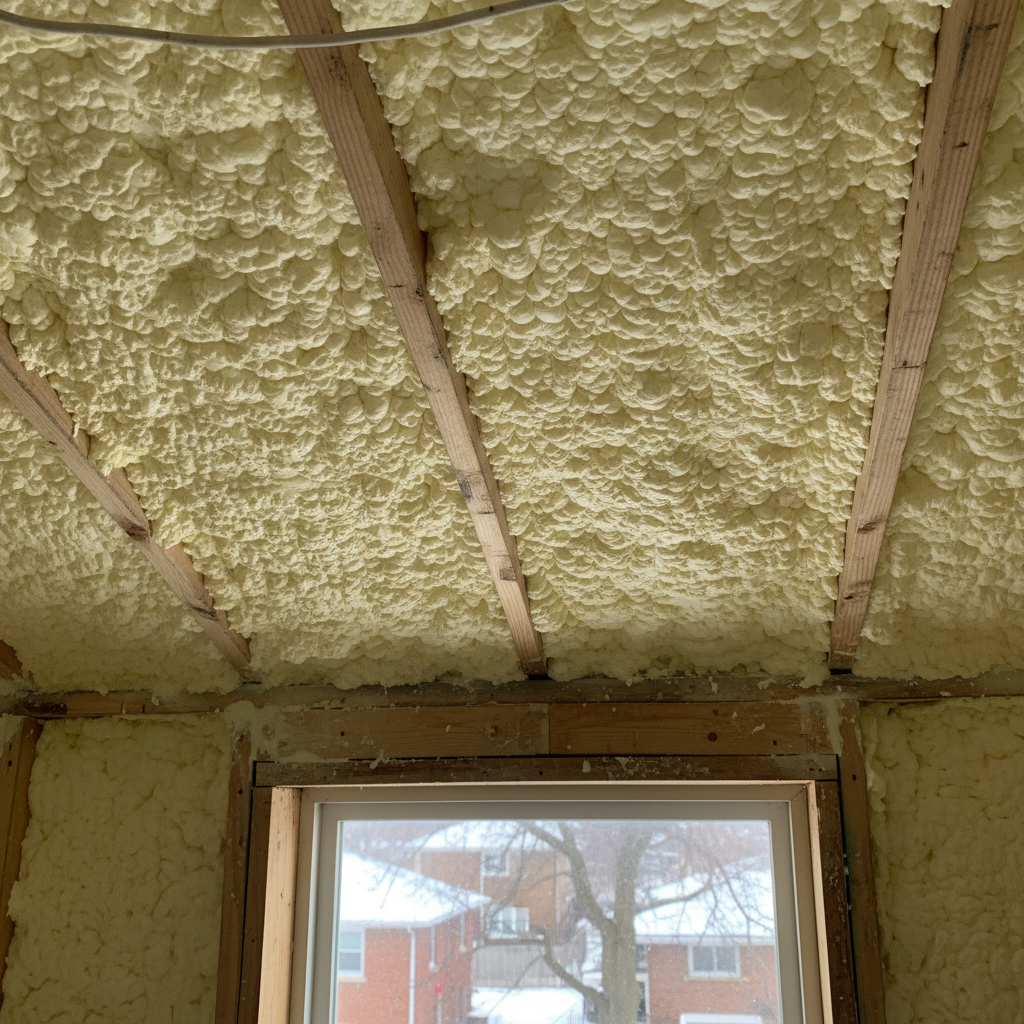
Alright, let's talk open cell spray foam. You've probably heard about it, maybe seen it on TV, and you're wondering if it's right for your place here in Evanston. It's a fantastic insulation product, but it's not a magic bullet, and it's definitely not a DIY job for most folks. I've been doing this for years, and I've seen the good, the bad, and the ugly. So, let's break down what you need to know.
Before You Even Think About Spray Foam
First off, open cell foam is a soft, spongy material. It expands like crazy when it's applied, filling every nook and cranny. It's great for air sealing and insulation in one go, which is a huge benefit for older homes, especially those classic two-flats near Central Street with their drafty attics. It's also vapor permeable, meaning it can breathe a little, which is important in our climate where moisture can be a real issue.
Before you even think about getting a quote, figure out where you want to use it. Open cell is typically best for above-grade applications: attics, rim joists, cathedral ceilings, and wall cavities. It's not usually recommended for basements or crawl spaces where moisture is consistently high, because it can absorb water. For those areas, you'd want closed cell foam, but that's a different conversation.
Next, clear out the space. Seriously, clear it out. If you're doing an attic, get all your stored stuff out of there. If it's walls, you might need to remove drywall. The less obstacles, the better for the crew and the better the application.
The Installation: Call a Pro, Every Time
Can you DIY spray foam? Look, technically, you can buy small kits. But I'm going to tell you right now: don't. Not for anything more than a tiny repair or a small, non-critical area. Spray foam, especially the two-part systems, requires specialized equipment, training, and safety gear. The chemicals involved are no joke. You need proper ventilation, respirators, full body suits. Mess up the mix ratio, and you get foam that doesn't cure right, or worse, off-gassing issues that can stick around for a long time.
When we come in, we're talking about a truck-mounted rig with heated hoses, precise pressure controls, and trained technicians. We mask off everything that shouldn't get foam on it – and I mean everything. Overspray is a real thing, and once it's on something, it's a nightmare to get off. We'll also make sure the area is properly vented during and immediately after application. You'll need to be out of the house for at least 24 hours, sometimes longer, depending on the specific product and ventilation.
A good contractor, like us at Western Insulation Company, will also assess your ventilation strategy. If you're sealing up an attic, you might need to adjust soffit and ridge vents, or even add mechanical ventilation, to prevent moisture issues. This isn't something you want to guess at.
After the Foam is In
Once the foam is cured and you're back in your home, you'll notice a difference pretty quickly. Your house will feel more comfortable, less drafty, and your energy bills should start to drop. That's the whole point, right?
What do you need to do afterward? Not much, usually. The foam itself is pretty maintenance-free. It's stable once cured. You shouldn't compress it or try to move it. If you need to run new wiring or plumbing through a foamed cavity, it's a bit of a pain. You'll have to cut it out, run your lines, and then re-foam the area. Again, a small kit might work for a patch, but for anything significant, you're better off calling us back.
Keep an eye on your indoor humidity, especially in the first year. Because your house is now much tighter, you might find you need a dehumidifier more often, or less often, depending on your home's previous condition. It's all about balancing that tighter envelope.
The biggest thing after installation is just enjoying the benefits. Quieter rooms, consistent temperatures, and lower heating and cooling costs. It's a solid investment when done right.
The Bottom Line
Open cell spray foam is a powerful tool for making your Evanston home more efficient and comfortable. But it's a professional job. Don't try to save a few bucks by DIYing it; you'll likely end up spending more to fix mistakes. Get a few quotes, ask questions about their process and safety, and make sure they're experienced with the product. When it's done right, you'll be glad you made the investment.